

Blog Posts

BreastFriend at the Baby Show 2026
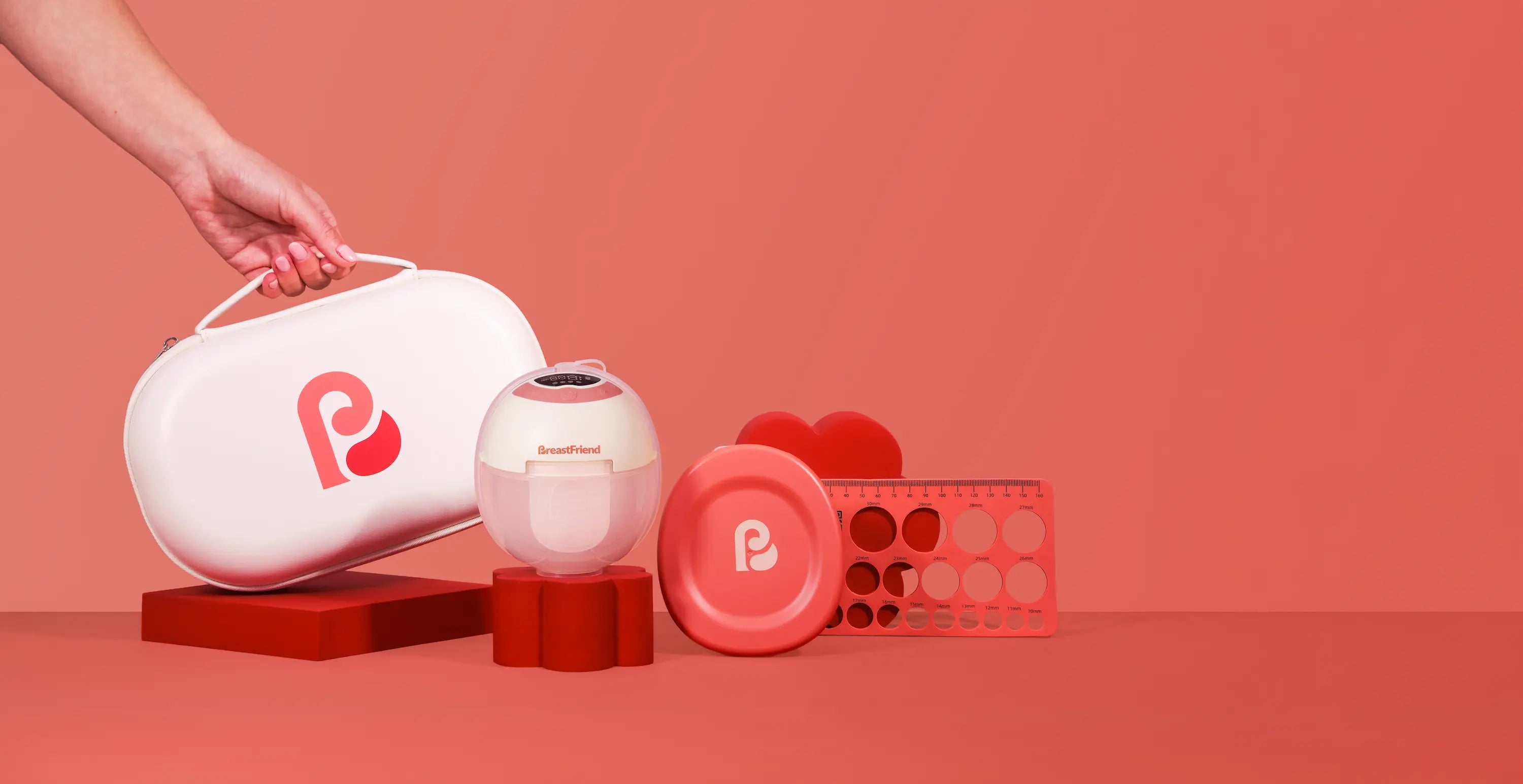
Come say hi! We're so excited to be at the Baby Show 2026 — and we've packed our stand with reasons for you to visit. BreastFriend is a proudly New Zealand, home-grown brand making feeding easier and more comfortable for mums. Come meet the founder, feel the products in person, and grab something special just for showing up. 📍 Auckland Showgrounds (217 Green Lane West, Epsom) Saturday 22 August, 9am–4pm Sunday 23 August, 10am–4pm Find us at Stand C09 Why visit our stand? Free gift for every visitor: Grab a free set of our reusable, Oeko-Tex certified breast pads — kind on your skin and the planet. Meet the founder: Say hello to the mum behind BreastFriend and hear the story firsthand. Meet our lactation expert, Libby Cain: Libby (midwife, nurse & lactation consultant) joins us Saturday 11am–3pm to answer all your feeding questions — free, no appointment needed. Touch the Breasties in person: Feel the quality for yourself, and be the first to see our brand-new Breasties in Blush. Scan to WIN your Breasties: Enter to win a pair of Breasties — one lucky winner each day! Snap a pic in our Mama Mirror: Take a photo at our Mama Mirror to go in the draw to win 1 of 5 gift cards. Show specials — in person only: Exclusive show pricing you won't find online. Available at our stand, for the two days only. Pre-order pickup: Placed an order before the show? Collect it from us at the stand. See you there! 💕 Follow along: @breastfriend.co.nz Questions? hello@breastfriend.co.nz
Learn moreBacking the Women Who Never Stop: Introducing Back in the Game
What Back in the Game is Back in the Game is BreastFriend's ongoing pledge to support mums who are professional athletes. Women in sport are too often overlooked, underfunded, and asked to achieve incredible things with a fraction of the backing their male counterparts receive. We want to help change that — in our own way, one athlete at a time. Through Back in the Game, BreastFriend puts real support behind women chasing their goals in sport while navigating motherhood and breastfeeding through donating Breasties. Why this matters to us BreastFriend exists to support women through some of the most demanding chapters of their lives. Sport is another one of those chapters. The discipline it takes to train, compete, and keep showing up, especially for women balancing sport with study, work, or motherhood, is the same strength we see in the mums we support every day. Backing female athletes felt like a natural extension of who we already are. Representation matters, too. Every woman who gets to keep competing because someone backed her becomes a role model for the next girl watching, wondering if there's a place for her in the game. There always should be. In her words We're proud to already have incredible women in our corner — athletes who juggle elite sport and motherhood, and know first-hand how the right support makes it possible. One of them is Michaela Brake (née Blyde) — Black Ferns Sevens star, two-time Olympic gold medallist, and two-time World Rugby Women's Sevens Player of the Year. Michaela welcomed her son, Harvey, in March, and is balancing life as a new mum with training at the very top of her sport. Here's how BreastFriend fits into her days: "For me to be able to train, I need my BreastFriend pumps to help me prepare! By pumping before training, I'm able to prepare a bottle for Harvey as well as feel comfortable before training. In 5 mins I have a bottle ready to go and my boobs feel good to go!" — Michaela Brake This is exactly what Back in the Game is about: backing women so they can keep performing at their best, on their terms. An ongoing commitment Back in the Game isn't a one-off gesture. It's an ongoing part of how BreastFriend operates — a standing commitment to keep putting support behind women in sport, for the long haul. As the initiative grows, we are looking to share the athletes and stories behind it, so you can cheer them on right alongside us. Every order helps back her And of course, this is powered by you. Every order placed with BreastFriend helps fund our commitments — including Back in the Game and our pledge to Little Miracles Trust. So when you shop with us, you're helping a female athlete stay in the game, keep training, and keep chasing what she's working so hard for. Thank you for being part of it. 💛 Marie-Claire Founder, BreastFriend
Learn more
BreastFriend's pledge to Little Miracles Trust
Our new monthly pledge Starting this July, BreastFriend is committing to donate $4,548 worth of product every year to the Little Miracles Trust — New Zealand's national neonatal charity. Every month, we send products directly to the Trust, and their team gets them into the hands of the families who need them most: parents of multiples juggling two or more little ones at once, and mums who simply can't afford a breast pump. The Trust manages all of it. We send the product; they make sure it reaches the right whānau. It's a partnership I trust completely, because no one understands these families better than they do. Why this matters so much Around one in ten Kiwi babies spends time in a NICU or SCBU. Every year in Aotearoa, roughly 4,800 babies are born prematurely, and more than 1,000 full-term babies need specialist neonatal care too. Behind every one of those numbers is a mum. A mum who may be expressing milk around the clock for a baby she can't yet hold. A mum trying to feed twins or triplets while she recovers herself. A mum facing costs she never planned for, at the most overwhelming time of her life. And here's something a lot of people don't realise: the Little Miracles Trust receives no government funding at all. Everything they do is powered by the generosity of individuals and businesses who choose to step up. A story that says it all Sammie Nonu, with her triplet boys If you ever wonder why this matters, this is why. Sammie Nonu, a first-time mum to triplet boys born four months early, shared her journey with us: "My BreastFriend journey began when I became a first-time mum to three beautiful triplet boys who decided to make their grand entrance into the world four months early. Alongside feeling completely overwhelmed by absolutely everything, the words 'expressing' and 'pumping' were completely foreign to me and, quite frankly, they stressed this new mama out. Fast forward 147 days in the NICU, and I genuinely don't think I would have had such a successful breast pumping journey or maintained my milk supply without BreastFriend. As a portable, hands-free pump, it gave me the freedom to express while still being fully present through everything our NICU journey threw at us. That freedom was essential during some of the most fragile days of our lives. BreastFriend helped me provide enough milk for three extreme micro-preemie babies, and for that I will always be grateful.Not only is the product incredible, but the company behind it is too. It's clear that the founder's passion is to support mothers through every stage of their breast pumping journey. BreastFriend played such a significant role in helping me through one of the most challenging seasons of my life, and I genuinely couldn't recommend this breast pump enough!" Three babies. 147 days in the NICU. This is exactly the kind of family our pledge exists for — and exactly why making it monthly matters so much. From a one-off gift to an ongoing promise This isn't the first time we've given back. Back in August 2025, just weeks after we launched, we donated $1,682 worth of product to mums in need. It meant the world to be able to do that so early on. However, a one-off never quite felt like enough. Families in the NICU don't need help just once. They need it every week, every month, through the long stretch of neonatal care and the transition home afterwards. So we've made our support ongoing. Every month, without fail, the products keep coming. Every order plays a part And this is only possible because of you. Every single order placed with BreastFriend helps fund this pledge. So when you shop with us, you're not just supporting your own feeding journey — you're helping a mum you'll never meet get the pump or the products she couldn't otherwise afford, at the exact moment she needs them. That's the kind of business I've always wanted BreastFriend to be. One that shows up. One that gives back. One that remembers where it started — with a mum at home, believing that every other mum deserves support too. Thank you for being part of it. 🧡 Marie-Claire Founder, BreastFriend
Learn more
Nominate BreastFriend for the OHBaby! Awards
BreastFriend has the chance to be nominated for the OHBaby! Awards, and if The Breasties have made your pumping journey a little comfier, we'd be so grateful for your vote.
Learn moreMy Low-Tox Breastfeeding Toolkit (And Why BreastFriend Made the Cut)
This blog is written by Sarah, founder of Low Toxin Rabbit, a mum and former health advisor on a mission to share her journey of detoxifying everyday life. Sarah has lived experience of transforming from tired, heavily medicated and frequently sick to completely healthy and medication-free, successfully healing her Graves disease through a low-toxin lifestyle. Through Low Toxin Rabbit, she aims to inform and inspire others to understand what we put into our bodies and the steps we can take to support good health and prevent poor health. This is not medical advice, and we always recommend discussing any concerns you have with your GP or healthcare team. Breastfeeding hasn't come easily for me. With every single one of my kids, I've battled low supply. It's been one of the harder parts of motherhood, and one I've had to genuinely work at. Breastfeeding, for me, was not the natural, instinctive experience some women describe. Sarah is a mother of four based in New Zealand researching a low tox lifestyle to create a safer home environment. With my first baby, I remember doing a seven-day stint of virtually no sleep just to build my supply. Power-pumping with my pump, cluster feeding, drinking litres of water, and taking every supplement I could find. The breast pump I had at the time was a corded, plug-into-the-wall situation. I'd sit on the couch, tied to that chair, watching the clock and feeling the world go on without me. It was relentless. And in those early days when I just needed to rest, the fact that using a pump required me to be completely stationary made an already-hard situation feel impossible. I cried a lot during that period. Not because I didn't love breastfeeding, but because the logistics of producing enough milk while also being a functioning human felt completely at odds. Four babies later, I've finally landed on a combination of things that have let me exclusively breastfeed my last two without top-ups. And while no single tool is a magic fix, a few have genuinely changed the game. What's worked for me Through trial and error across four kids, here's what's actually worked for me while still taking a low-tox approach: Protein, protein, protein. I cannot overstate how much focusing on protein intake has helped my supply. With my earlier babies, I didn't realise just how much my body was using to produce milk. Now I prioritise it at every meal, supplement with bone broth protein powder in smoothies and soups, and notice an immediate difference if I let it slide. I recommend Mitchells. LOWTOXINRABBIT for 10% off. Bone broth. Nourishing, healing, and easy to add to almost anything. I sip it in the morning, add it to meals, and treat it as part of my postpartum care. I recommend Best Bone Broth, use SARAH10 for 10% off sitewide. Blessed thistle. A traditional galactagogue I've used with each baby. For me it has really worked in boosting my supply, and is not overly complicated to add when you're in the thick of the newborn stage. Premade nourishing meals. When you're running on three hours of sleep and have other kids to feed, having ready-made meals in the freezer or fridge means you actually eat. Skipping meals drops supply faster than anything else. I often forget to eat, so having something on hand to quickly heat and eat has truly been a game-changer. Hydration that isn't just water. Sipping warm drinks throughout the day that are nourishing — herbal teas, broth, lactation drinks. I am the biggest warm drink fan, even at the peak of summer. And then there's the pump. After being tied to that chair with my other three babies, I knew that if I was going to make it work this time, with multiple kids to manage, there was simply no time to sit down to pump. I needed a wearable breast pump that worked with my actual life, not against it. This time around, I've been using the Breasties Utimate Double Wearable Breast Pump, and honestly, it's been a quiet revolution as a busy mum with no time to stop. While my old corded breastfeeding pump kept me stuck on the couch, this wearable breast pump slips into my bra and I get on with my day. I've pumped while making food for the older kids, while homeschooling, and while doing all the chores that happen when baby sleeps. For someone who needs to use a pump to support supply, a wearable breast pump has made it possible to keep going while still juggling the needs of three kids and a baby. As someone who cares deeply about what comes into contact with my body, I also love that Breastfriend wearable breast pumps are free from BPA, PVC, latex, phthalates, and nitrosamines. They're the lower-tox breastfeeding pump option I've found on the New Zealand market, and that's why they've earned a permanent place in my postpartum toolkit and on my low-tox directory. The Breasties with their nightlight feature on. For the mum in the trenches right now If you're struggling with supply, please know this: it's not because you're failing. Some bodies just need more support, and finding the right combination of tools takes time. Be patient with yourself. Focus on protein, rest where you can find it, and give yourself permission to use the tools that make this season more sustainable. Breastfeeding is not all-or-nothing. Every drop matters. And the version of breastfeeding that works for you and your family is the right version. If you'd like to try a Breastfriend wearable breast pump, you can use my code LTR for $25 off the Ultimate Wearable Double Pump. You've got this, mama. Sarah is a BreastFriend affiliate and may earn a commission from purchases made using her code. All views and experiences shared are her own.
Learn moreBreastie Care | Accidental Damage Cover | Terms & Conditions
Breastie Care We've got your Breasties covered. Terms & Conditions Effective Date: 4th May 2026 AT A GLANCE Price: $49.00 NZD (one-time payment with your pump purchase) Coverage: 12 months from the date you purchase your Breasties What’s covered: Accidental damage to your pump’s motor unit: drops, knocks, spills, liquid exposure and electrical surges What you get: A free replacement motor, shipped to you at no extra cost Claims: One claim per plan Who can buy: Available at checkout when you purchase your Breasties 1. What Is Breasties Care? Breasties Care is our way of making sure a mishap doesn’t get in the way of your pumping journey. Breasties Care (“the Plan”) is a product protection service agreement offered by BreastFriend (“we”, “us”, “our”). It covers accidental damage to your breast pump’s motor unit that happens during normal use. For the avoidance of doubt, this Plan is a service agreement and is not a contract of insurance. 2. Who Can Get Breastie Care? Breastie Care is available to add at checkout when you purchase a new BreastFriend Breasties breast pump through our official sales channels (breastfriend.co.nz or authorised retailers). It can’t be purchased separately or added after your order is complete. Each Plan covers one (1) set of Breasties and is tied to the original purchaser and the specific pump purchased. The Plan is non-transferable. Only one Plan can be purchased per pump set. Breasties Care is available to New Zealand customers only. 3. What’s Covered? We know things get hectic, your Breasties might take a tumble off the nightstand or have an unexpected encounter with a spilled drink. Breasties Care covers accidental damage to your pump’s motor unit from sudden, unintentional events during normal use, including: Drops and impacts: your pump gets knocked off a surface, dropped, or bumped. Liquid exposure: milk or other liquids come into contact with the motor unit. Electrical events: power surges, voltage fluctuations, or short circuits (not caused by a product defect). Other accidental damage: any other sudden, unintentional accident that damages the motor during normal use. When your claim is approved, we’ll send you a replacement motor at no extra cost. Shipping within New Zealand is on us. The replacement motor may be new or refurbished, at our discretion. 4. What’s Not Covered? We want to be upfront with you, Breasties Care is designed for genuine accidents, so there are some things it doesn’t cover: Deliberate misuse, abuse, or intentional damage. Cosmetic damage that doesn’t affect how the motor works (scratches, dents, discolouration). Loss, theft, or mysterious disappearance of the motor. Damage to accessories, flanges, diaphragms, milk collectors, valves, or anything other than the motor unit. Damage from unauthorised modifications, repairs, or disassembly, including repairs attempted by third parties. Damage from using an incorrect charger, non-approved power accessories, or incompatible power sources. Damage from not following the care instructions or user manual. Normal wear and tear. Any defect covered under the Consumer Guarantees Act 1993 or the manufacturer’s warranty, those are your existing legal rights and Breasties Care doesn’t replace them. 5. Something Happened — How Do I Claim? Don’t stress, mama, we’ll sort it out together. Here’s what to do: Get in touch within 14 days of the accident by emailing hello@breastfriend.co.nz. Your claim must also fall within your 12-month coverage period. Let us know your order number, and what happened. Send us clear photos or a short video showing the damage to the motor unit. Once we’ve reviewed everything and your claim is approved, we’ll ship your replacement motor within 5–10 business days. In some cases, we may ask you to return the damaged motor unit before we can approve your claim. If we request a return, shipping costs for the return are at your expense and we’ll provide the return address and instructions. We do need to keep things fair for everyone, so claims made in bad faith or involving deliberate damage will be declined. 6. How Many Claims Can I Make? Breasties Care covers one (1) claim. Once we’ve sent your replacement motor, the Plan is fully used and no further claims can be made on further motors. If you purchase a new Breasties in the future, you’re welcome to add Breasties Care to that order too. 7. About Your Replacement Motor Your replacement motor is provided to get you back up and pumping as quickly as possible. Please note: The replacement motor is not covered by a new Breasties Care plan. If you’d like coverage for a replacement motor, this would need to be purchased with a new pump. If the exact motor model is unavailable at the time of your claim, we’ll provide an equivalent replacement or, at our discretion, a store credit to the value of $114.00 NZD. 8. How Long Am I Covered? Your Breasties Care coverage starts on the day you purchase your pump and runs for twelve (12) months from that date. You’ll need to submit any claims before the expiry date, unfortunately we can’t accept claims after your coverage period has ended. 9. Pricing & Refunds Breasties Care costs $49.00 NZD (inclusive of GST) and is a one-time payment made at checkout. The Plan is non-refundable, including if your coverage period expires without a claim. The one exception: if you return your pump under our standard returns policy (unused and within the return window), we’ll refund the Breasties Care fee in full too. 10. Your Existing Rights Breasties Care is in addition to your rights under the Consumer Guarantees Act 1993 (CGA). Under the CGA, products must be of acceptable quality, fit for purpose, and match their description. If your pump has a manufacturing or design fault (i.e., something that isn’t your doing), you may be entitled to a repair, replacement, or refund under the CGA, whether or not you have Breasties Care. Breasties Care specifically covers accidental damage caused during normal use, which wouldn’t typically be covered under the CGA or the manufacturer’s warranty. 11. What Breasties Care Is (and Isn’t) Breasties Care is a product protection service agreement between you and BreastFriend. It is not a contract of insurance. BreastFriend is not an insurer and is not regulated by the Financial Markets Authority in respect of this Plan. All obligations under Breasties Care are fulfilled directly by BreastFriend as the seller and service provider. 12. Limitation of Liability Our total liability under Breasties Care is limited to providing one (1) replacement motor unit (or equivalent store credit as described in Section 7). We’re not liable for any indirect, consequential, or incidental loss or damage arising from the use of, or inability to use, your pump or any replacement part. 13. The Fine Print We may update these terms from time to time. Any changes will only apply to Plans purchased after the update, your existing Plan won’t be affected. This Plan is governed by the laws of New Zealand. Any disputes will be subject to the jurisdiction of the New Zealand courts. If any part of these terms is found to be invalid or unenforceable, the rest will continue to apply in full. 14. Get in Touch Got a question about Breasties Care? We’d love to hear from you. Email: hello@breastfriend.co.nz Website: www.breastfriend.co.nz
Learn more
You made it through a pregnancy filled with morning sickness, here's how to support your body for what comes next.
This blog is written by Emma Michelsen, co-founder of Aggie, who develop science-led supplements to support women through pregnancy. Emma has been a Hyperemesis Gravidarum sufferer with lived experience of successfully breastfeeding after being left depleted post-pregnancy. This is not medical advice, and we always recommend discussing any concerns you have with your GP, midwife or LMC team. If you've spent most of your pregnancy sick, this moment probably feels complicated. You're almost there. And if you're hoping to breastfeed, but your body feels tired in a way that is hard to explain, it’s normal to question whether you have enough left. This post is for you. It’s not a to-do list, we know there is already so much overwhelm filling up your mind right now, it’s more of an open conversation and a gentle reminder that you are doing great. What is Hyperemesis Gravidarum and what does it actually do to your body Hyperemesis Gravidarum isn't just bad morning sickness. For the people who experience it, it's months of severe vomiting, significant weight loss, dehydration, and nutritional depletion that can last well into the third trimester. The isolation of it, and the feeling of not being taken seriously, adds another layer entirely. If you want to understand more about what's actually happening in your body during HG, and why it hits so hard, the team at Aggie have written something really useful: Navigating Hyperemesis Gravidarum: Understanding, Coping, and Finding Support. There's also a fascinating piece on the science behind why HG happens at all: GDF15: The Breakthrough Behind Morning Sickness. The short version: your body has been working incredibly hard under incredibly difficult conditions. You're not starting this next chapter from a place of rest. You're starting it from wherever you landed, likely exhausted, depleted and for a lot of women, suffering from self-doubt. Can you still breastfeed after HG? Most people who have HG do go on to breastfeed. The body's ability to make milk is more resilient than people often expect, and HG doesn't directly damage the glands or tissue involved in milk production. There are a few things worth knowing going in. Prolonged vomiting and poor nutrition can affect some of the nutrient stores your body draws on in early lactation, particularly iodine, vitamin D, and B vitamins. This doesn't mean breastfeeding won't work, it just means that topping those stores up in the final weeks, even a little, gives you a better start. Hydration matters more than most people realise. Breast milk is mostly water. If dehydration has been part of your pregnancy, getting on top of fluids before birth is one of the most direct things you can do for your supply. Fatigue is a genuine factor too. Breastfeeding is physically demanding at the best of times. Coming into it after a hard pregnancy means your reserves are lower, and that's worth building your support around. Labour and the newborn stage is most likely going to impact exhaustion significantly, and you want to make sure you’ve rested as best as you can coming into this stage. Go easy on yourself, though. You’ve had a lot on your plate. If you're still on antiemetic medication, it's worth having a conversation with your midwife or LMC before birth about whether anything needs adjusting once baby arrives. Most commonly used medications are compatible with breastfeeding, but it's worth checking for your specific situation. What can help in the lead-up to birth None of this requires a perfect pregnancy. These are small, practical things for a body that's already done a lot. Drink little and often. Small sips throughout the day are easier to tolerate than large amounts, and more effective for hydration. If plain water still triggers nausea, which it does for many people with HG even late in pregnancy, electrolytes can make a real difference. Morning Relief by Aggie is available at BreastFriend and was made specifically for pregnancy nausea and vomiting. It has clinically studied ginger and electrolytes to help with hydration when drinking is still a battle. Eat what your body will take, without the guilt. If you're still eating crackers and plain rice, that's fine. Getting anything in is what matters right now. When you do have a window where food feels more possible, protein and complex carbohydrates are worth prioritising as they support the hormonal balance that plays into milk production. Have another look at your supplements. Folate, iodine, vitamin D, and B12 all matter for postpartum recovery and milk production. If you've struggled to keep tablets down throughout your pregnancy, ask your midwife or pharmacist about liquid or chewable alternatives. Even partial supplementation in the final weeks is better than none. Be honest with your care team about wanting to breastfeed. Your LMC can only support your goals if they know what they are. Let them know breastfeeding matters to you, so they can flag any medications that may need reviewing, connect you with a lactation consultant before baby arrives, and help you plan realistically for the early days. Ask your midwife about antenatal colostrum harvesting. Some people hand-express and collect small amounts of colostrum before birth. Ask your midwife when it would be a safe time for you to consider this. Having a little reserve can take the edge off the pressure in those first days, particularly if you're exhausted or baby takes time to latch. It's not for everyone and it's not recommended if you have a history of preterm labour or cervical concerns so please check with your midwife first. Rest is not laziness. At the end of a pregnancy like this, it’s ok to slow things down. Your hormones, your nervous system, your body will benefit from rest. A well-rested mum going into labour and the newborn days serves your baby far more than a ticked-off to-do list. What if breastfeeding doesn't work out? Fed is always best. Some people come through HG and breastfeed without much trouble. Some find it harder than they expected. Some can't, for reasons that have nothing to do with how much they wanted it, or due to factors in their pregnancy. And some choose not to breastfeed at all, because they know their body and their limits, and that's a completely valid decision. How you feed your baby is not a measure of your love or your effort. You grew this baby through months of being seriously unwell. That's already extraordinary. If breastfeeding is something you want to try and it gets difficult, get support early rather than struggling quietly. A good lactation consultant can make a real difference in those early days. And if you end up expressing, a hands-free wearable pump like The Breasties can genuinely help when you're already stretched thin. Going in with realistic expectations The first few weeks after birth are intense for any new mum. After HG, they might be harder than you expected, and it's worth being gentle with yourself about that. Ask for help before you need it. Be honest with the people around you about how depleted you are. You've already done something really hard. What comes next is hard too, but you're not doing it from nothing. You're doing it from everything you've already proved you can handle. Where to find support For morning sickness and HG: Morning Relief by Aggie Navigating HG: Understanding, Coping, and Finding Support Accessing Support When You Have HG GDF15: The Science Behind Morning Sickness Hyperemesis Support NZ Facebook Group: facebook.com/groups/885735235288936 Healthline (free, 24/7): 0800 611 116 For breastfeeding support: Your LMC or midwife Find a lactation consultant via NZLCA The Breastfriend Blog This article is for informational purposes only and is not a substitute for medical advice. Please talk to your midwife, LMC, or GP for guidance specific to your pregnancy and postpartum experience. References: American College of Obstetricians and Gynecologists. (2015). ACOG Practice Bulletin No. 153: Nausea and Vomiting of Pregnancy. Obstetrics & Gynecology, 126(3), e12–e24.
Learn more
The Pump Your Mum Wished She Had: Redefining the Modern Motherhood Aesthetic
When I have conversations with women my mothers' age about what I do for work, I'm often met with "I wish I had that with my babies". This concept got me thinking, as I feel like many of us intimately connect with our mothers' journeys once we have children of our own. We realise that their journeys were so similar to ours and while they may have had a village, we have technology. The more I thought about this, the more I felt that BreastFriend had a place to honour these women, our mothers, and connect the mother of today to the mother of yesterday and the creative concept for the Pump Your Mum Wished She Had was born. The vision came to me quickly: the 80s, a red car, fashion, a mother and this new technology. My first port of call was my good friend Juudit, who is a mother but also an editorial model who's worked on international campaigns. The whole vision around the campaign was her, the mother, Elsie's mum, I saw her in every image I was designing in my mind. And I was so excited when I got her message back saying "Hey gal, oh my gosh I LOVE this!!" and I knew we were going to make it happen! From there, it was a journey to finding the right car, which led me down a rabbit hole of contacting any vintage car owner in the area, ideally a red one, and thankfully we hit the jackpot when a local offered their car up for the shoot. Subsequently I locked in Sita from Beauty Tribe NZ, a local make-up artist, a mother but also one of the Breastie māmās who came with her little man Navi - who's now 6 months old - and absolutely nailed the make-up concept. From a styling perspective, I had a clear vision, and if you followed along on Instagram, you know that I actually reached out to you all in stories to get your thoughts on the outfits. I was very lucky to be supported by Recycle Boutique Tauranga for this, and we managed to use some of their gorgeous second hand pieces for our shoot. The Breasties themselves were dressed up, and a handmade case was brought in made by my mother in law, Kay, from The Eye Of A Needle. While the images are undeniably editorial, Juudit’s personal journey as a mother is what truly brings this campaign to life. It is easy to look at a stunning, slim model and assume her path to motherhood was effortless. But that is the illusion I want to fight against. In talking with Juudit about her own experience, it’s clear that motherhood is the great equaliser. Like so many of us, Juudit shared that her early postpartum journey was far from easy. She faced the same sleepless nights, drowned in her milk supply and the same travel challenges that every breastfeeding mother knows, including feeding in unsanitary conditions like on the floor of an airplane. Seeing Juudit in these photos isn’t about unrealistic standards; it’s about reclaiming your space. When we talked about the campaign’s retro aesthetic, Juudit shared that it felt like a direct nod to her own mother. Her mum wasn't able to nurse her first baby, so for six months, she exclusively hand-expressed because there simply weren't any pumps available to her back then. Hearing about her mum’s resilience, her absolute commitment to breastfeeding despite the lack of tools, gave this entire shoot a deeper meaning for both of us. Juudit is a testament to the fact that while the tools have changed, the grit of motherhood remains the same. As she put it: "Pumping is rarely glamorous, but it’s fun that it can be. You truly can pump anywhere, any time, with the Breasties!" A Note on the Shoot This shoot was a labor of love, grit, and a little bit of fashion-forward thinking. It felt fun and effortless, in a way it was two friends hanging out, taking some cool photos, and trying to change the narrative for the next generation of mums but the result is, I think, much deeper than that. Many mothers were directly or indirectly involved and their energy translates through the images. Creative Direction: Marie-Claire Houtsmuller / @breastfriend.co.nz Photography: Marie-Claire Houtsmuller / @mini.piccies + @breastfriend.co.nz Model: Juudit Breakey (my dear friend) / @juuditbreakey Make-Up: Sita Engling / @beautytribenz Styling: Marie-Claire Houtsmuller / @breastfriend.co.nz + Recycle Boutique Tauranga / @recycleboutiquetauranga Location: Plummers Point Rd, Whakamarama, Tauranga, New Zealand. Special thanks to Craig Bettjeman's gorgeous Holden Monaro 1987 for the vintage backdrop.
Learn more
Hotmilk Bras are the Best Match for Your Breasties Wearable Pump
If you are using The Breasties wearable pumps from Breastfriend, your choice of bra is the most important factor for success. To get hospital-grade results from a wearable pump, you need a bra that provides a firm, secure fit. I recommend Hotmilk bras as the #1 choice to pair with your Breasties. They happen to be a local business based right here in Mount Maunganui, but more importantly, their engineering is perfect for holding wearable pumps in place. I chose Hotmilk throughout my pregnancy and breastfeeding journey as my cup size increased from a D to a E. The Importance of a Firm Fit The biggest mistake mums make with wearable pumps is wearing a bra that is too loose or overly stretchy. If the fit isn't firm, you run into three main issues: The pump will slant: If the Breasties tilt outward or away from the body, you lose the airtight seal against your skin. Suction drops: A loose bra means less compression. Without that firm "press" against the breast, the pump can't maintain the vacuum needed for high milk output. Leakage: Wearable pumps must remain upright. A sagging bra allows the pump to shift, which often leads to milk leaking out of the flange. A Hotmilk bra provides the structural integrity needed to "shelf" the pump, keeping it vertical and flush against your body. MC's recommend styles 1. My Necessity The My Necessity is my top recommendation for a seamless, everyday fit that doesn't compromise on hold. The Construction: This is a multi-fit, seamless bra that features a double-layered fabric. It’s designed to be incredibly comfortable but has enough "grip" to keep a pump stable. The Benefit: It is versatile enough to grow with you, yet the band and cup tension are strong enough to act as a harness for the Breasties. It keeps the pump centered and tight against the tissue so the suction never wavers. 2. Caress The Caress is the go-to for those who want a premium feel without losing the necessary "hold." Flexi-Fit Fabric: Made from a high-quality, eco-friendly bamboo blend, it has excellent recovery. It stretches to accommodate the pump but maintains enough tension to keep the seal tight. The Benefit: It’s exceptionally soft on the skin but provides the "squeeze" required to keep your Breasties from shifting while you move. Both of these bras were incredibly supportive and comfortable to sleep in also, they washed well and never lost their support throughout the year I wore them. These bras will be used again for the next baby! Final Setup Tip When you put your Breasties on, ensure your Hotmilk bra is adjusted to its firmest comfortable setting. If the pump feels like it can wiggle, tilt, or slide, tighten the straps or move to a tighter hook on the back closure. A snug, upright fit ensures you get every drop of milk possible during your session.
Learn more