

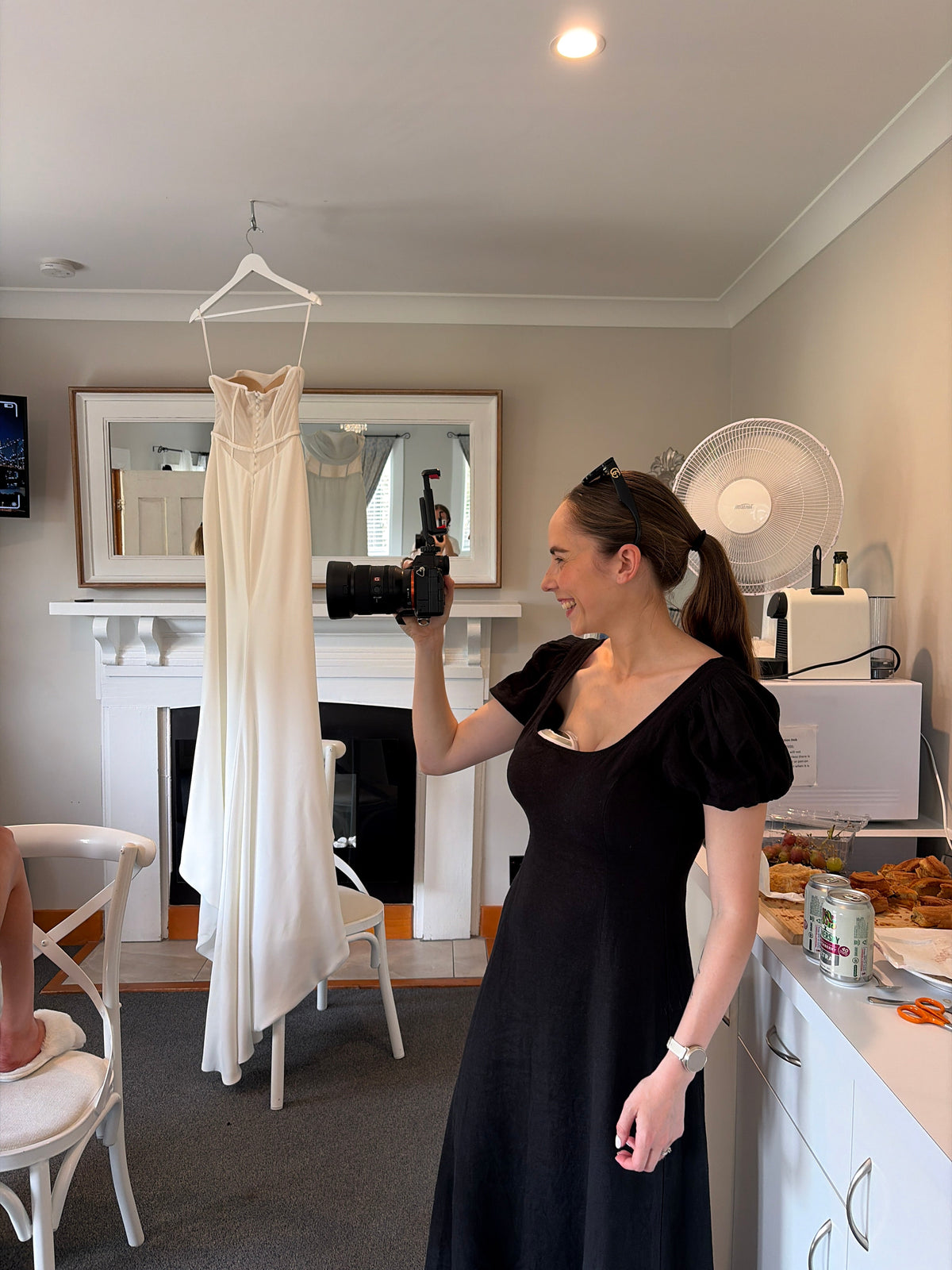
Rebecca is a photographer and mum of two. When her daughter Maia arrived at 36 weeks and spent her first days in NICU, Rebecca found herself exclusively pumping. Here she shares the honest reality of it, and the tools and routines that made it feel doable after a year of exclusively pumping, while working a job that also required her to be on the move.

Most people do not have a baby and think, "You know what? I would love to exclusively pump!" At least, I did not. I was really excited to breastfeed! I knew that breastfeeding could be hard, but I was not at all mentally prepared for it to just straight up not work.
My daughter Maia was born at 36 weeks and spent her first two days in NICU. When your baby is in the NICU, pumping is usually part of your journey, because you are trying to bring your milk in and provide colostrum or breast milk while your baby is being cared for. So from the very beginning, pumping was something I had to do.
At that point, I definitely saw it as temporary, and I was really looking forward to starting our breastfeeding journey. I thought to myself that I would pump while she was in NICU and then we would breastfeed, and that would be that! But things ended up looking quite a lot different.
When Maia transitioned out of NICU and onto the feeding unit, we started working on breastfeeding. At first, she struggled to latch because she was so little, so we used a nipple shield. Once she was latching with a nipple shield, it seemed like things were going great! I was so happy; it genuinely felt magical. People would watch our feeds and say, "She's feeding great!" On paper, it seemed like breastfeeding was working. But at her second weigh-in, she had lost more weight.
She would gain a little, then lose a little. We tried so many different things. We kept trying to figure out what was happening, because from the outside, she looked like she was feeding well.
In the end, it seemed to be a transfer issue. She could latch and suck, but she was not transferring enough milk to gain weight consistently. The turning point came when we started exclusively pumping and bottle-feeding. That was when she finally began putting on weight more consistently.
I tried to keep breastfeeding alongside pumping, but the fear of Maia losing weight again was so overwhelming that exclusive pumping became our path.
I am so grateful I could feed her that way. But I will be honest, it also felt really overwhelming and emotional. I felt like I had failed her in some way. However, I persevered despite the overwhelm.
Pumping every three hours, feeding your baby, washing parts, storing milk, preparing bottles, trying to leave the house, and somehow also recovering from birth and caring for a newborn is a lot. It is one of those things that can look simple from the outside, but when you are in it, it can feel like your whole day revolves around milk.
Over time, I found a few things that made pumping feel much more manageable. Not easy exactly, because pumping is still pumping. But less chaotic, less stressful, and more doable.
If you are in the thick of pumping right now, I hope these tips help.
1. Get a wearable pump!!
This was probably the biggest game changer for me.
At first, I was using a pump that was technically called portable, but it did not feel very portable to me. It had cords and a big motor. I could move it around the house if I needed to, but I still felt really restricted. I found it so frustrating (especially when the damn cords would get caught on something!).
When you are pumping multiple times a day, the last thing you want is to feel like you are constantly plugged into a machine. I felt like I was always either feeding, pumping, or washing something. There were moments where I genuinely thought, "I do not know how much longer I can do this."
That pump was a big part of why I started wanting to quit.
Then I came across The Breasties wearable pumps from BreastFriend, and they made such a difference.
What I loved was that they were actually wearable. Not just "portable" in the sense that you could carry them from one room to another, but wearable in the sense that I could put them in my bra and move around.
They were light, easy to use, easy to clean, and most importantly, they had hospital grade suction. That was huge for me. I had heard that some wearable pumps were more for occasional use alongside a plug-in, hospital-grade pump, but I needed something that did both, because using two pumps was not for me!
Being able to pump while moving around the house was game-changing. I could make breakfast. I could sort bottles. I could sit near Maia. I could do little jobs around the house. I could feel like pumping was fitting into my day, instead of my whole day having to stop every three hours for 20 minutes! That sense of freedom mattered so much to me.

2. Have more than one set of pump parts
If you are pumping often, having multiple sets of pump parts is one of the most practical things you can do.
I learned pretty quickly that the hardest part of pumping was not always the pumping itself. It was all of the logistics around it! The washing, drying, packing, sterilising, remembering what was clean, realising you needed to pump but your parts were still wet in the sink.
It really is the admin of pumping that can break you.
Having extra pump parts meant I was not constantly scrambling. If I had used one set, I could have another clean set ready to go. If we were heading out, I knew I had a clean set in my pump bag. It made the whole thing feel much less overwhelming.
This was especially helpful with The Breasties, because BreastFriend has extra pump parts available to purchase, so you can build your setup around what you actually need.
If you are pumping every few hours, I really think extra parts are worth considering. It is one of those purchases that might not feel exciting, but it can make your day so much smoother.
And honestly, anything that reduces the "oh no, I need to wash pump parts right now" panic is worth it.
3. Learn about the fridge hack
I did not know about the fridge hack for the first month or two of pumping.
So I was washing my pump parts between every single pump. Every. Single. Pump.
When you are pumping every three hours, that is incredibly overwhelming. You pump, you pour the milk, you label or store it, you wash everything, you dry everything, and then before you know it, it is nearly time to pump again.
It felt endless.
Then I learned about the fridge hack, and it made such a big difference.
The basic idea is that instead of fully washing your pump parts between every pump session, you put them into a clean container or zip-lock bag and store them in the fridge between uses. Because they are kept cold, you can reuse them for a period of time before washing them properly.
This is one of those things you should make your own decision on, especially if your baby is premature, immunocompromised, unwell, or has been in NICU. It is always worth checking with your midwife, doctor, lactation consultant, or trusted health professional about what is safest for your baby.
But for me, once I was comfortable using it, the fridge hack made pumping feel much more manageable.
It meant I was not standing at the sink washing pump parts eight times a day. It meant I could actually have a little bit of breathing room between feeds and pumps. It took away some of the constant mental load that comes with pumping. And when you are exclusively pumping, reducing the mental load is everything.
4. Use the pitcher method
The pitcher method was another thing that helped me feel more organised.
Instead of making every bottle directly from each pump session, I would pump, put the freshly pumped milk into the fridge to cool down, and then once it was cold, I would add it into a larger pitcher or container of breast milk. Then I would make Maia's bottles from that.
This made the whole bottle-making process feel so much simpler. Rather than having lots of little bottles of different amounts in the fridge, I had one main supply for the day. I could see roughly how much milk I had. I could make bottles more easily. I was not constantly trying to match random amounts together.
It also helped me feel less fixated on each individual pump session.
When you are pumping, it is very easy to look at one session and think, "Was that enough? Why was that less than yesterday? Is my supply dropping?" The pitcher method helped me think more in terms of total daily output rather than obsessing over every single pump.
For me, that really helped mentally.
I would still track what I needed to track, but I did not feel quite as emotionally attached to every bottle of milk that came out of each session.
5. Use a proper breast milk cooler when you leave the house
Leaving the house while exclusively pumping can feel like packing for a small holiday.
You need your pump. Clean pump parts. Bottles or milk bags. Something to store used parts in. A way to keep milk cold. Maybe a charger? Maybe a spare bra? Maybe snacks, because obviously.
At first, I thought I could just use a chilly bin or cooler bag situation, but I found it a bit stressful. I was always wondering if the milk was staying cold enough.
Using a proper breast milk cooler made me feel much more confident.
What I liked was knowing the milk was being kept fridge-level cold while I was out. That made outings feel easier. I did not feel like I had to rush home just because I had pumped. I could pump while out, store the milk safely, and keep going with the day.
When you are pumping, anything that makes leaving the house feel less complicated is a big deal.
Because it is not just about convenience. It is about feeling like you can still live your life.
6. Keep a pump bag packed
One thing that helped me was having a pump bag that was basically always ready (because you have extra pump parts, remember ;) ).
The Breasties come with a pump bag, and I found it really helpful to have one place where everything lived. Clean pump parts, storage bags or bottles, wipes, a charger if needed, and anything else I might need for pumping away from home.
That way, I was not trying to remember everything every time I left the house.
Because when you have a baby, your brain is already doing enough. You are remembering nappies, wipes, spare clothes, bottles, snacks, sleep times, and whether you brushed your teeth. Adding pump gear into the mix can feel like a lot.
Having a dedicated pump bag meant I could just grab it and go.
It sounds simple, but simple systems are what make pumping sustainable.

7. Accept that pumping is still a lot, even with the right tools
I think this is important to say.
Good tools make pumping easier, but they do not make it effortless.
Even with The Breasties, extra parts, the fridge hack, the pitcher method, and a good cooler, exclusive pumping was still a big commitment. It still required planning. It still shaped my day. There were still times I felt over it (mostly every day).
But those things made it feel possible.
They took something that felt insanely overwhelming and helped me create a rhythm around it. They gave me more flexibility. They helped me keep going for as long as I wanted to.
And I think that is the goal. Not to make pumping look perfect, but to make it feel more manageable in real life.
Because real life with a baby is not always tidy. It is not always calm. It is not always easy to pause for a perfect pumping session in a quiet room with a cup of tea beside you.
Sometimes you are pumping while reheating your cold cup of tea, settling a baby, or hanging up washing you have already rewashed three times.
That is motherhood.
If you are exclusively pumping right now
If you are exclusively pumping, or mostly pumping, I just want to say that it is a huge thing you are doing!!
I know that it's likely not the feeding journey you planned. It might be something you fell into because your baby was premature or had feeding challenges, or because breastfeeding just did not work the way you hoped. But it counts.
It is not "less than" breastfeeding. It is not an easy option. It is a full feeding journey of its own, and it takes so much love, commitment, and energy.
For us, exclusive pumping was what helped Maia grow, and that was truly everything to me. It was what worked when breastfeeding looked like it was working but was not quite giving her what she needed. It gave me a way to feed her breast milk and know how much she was getting, which calmed my anxiety.
And once I had the right systems in place, especially The Breasties wearable pumps, it became much less overwhelming.
So if you are in that season now, please be gentle with yourself. You do not have to do it perfectly. You are allowed to make it easier. You are allowed to use the hacks, buy the extra parts, pack the cooler, and choose the pump that helps you feel less trapped!
You are also allowed to stop when it no longer works for you. Feeding your baby matters, but so do YOU! Remember that your mental health is just as important.
And if pumping is part of your story, I hope you find the tools and routines that make it feel lighter to carry :)


